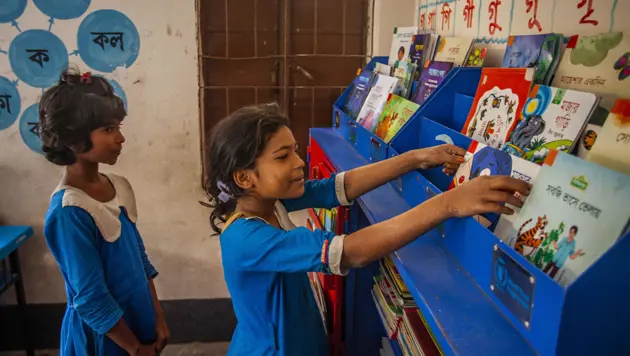
A holistic model integrating literacy, economic justice, and climate action for 10,000 children and 100 young women in Bangladesh.
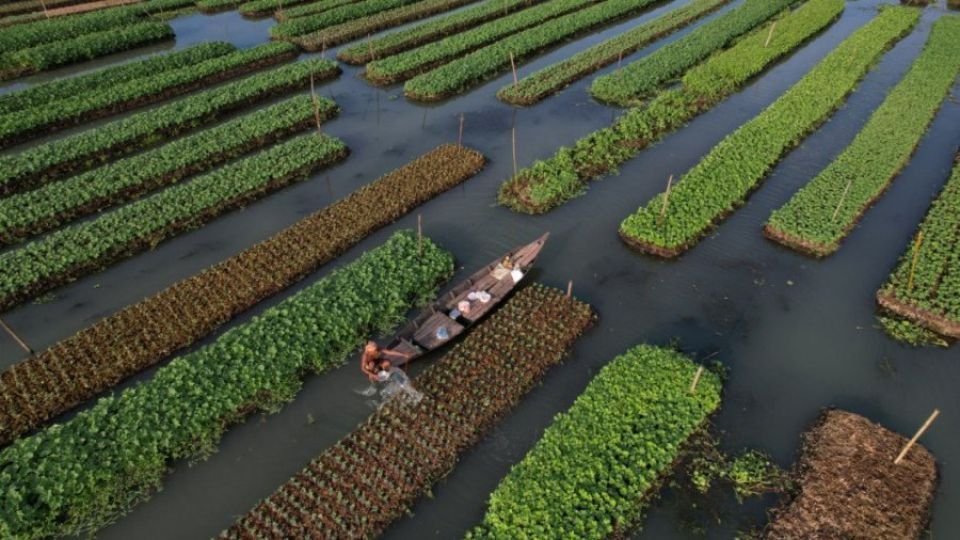
In Bangladesh’s underserved communities, systemic marginalization creates a cycle of vulnerability. Traditional interventions remain siloed, failing to address the interconnected reality of life for women and children.
50%+ of Grade 3 students lack foundational reading skills, limiting future economic mobility.
Young women face restricted mobility and 2x higher youth unemployment rates than men.
Frontline communities face floods and salinity but lack local agency and knowledge to adapt.
"The Gap: Traditional interventions are siloed—addressing literacy OR climate—failing to tackle the roots of poverty."
We disrupt restrictive gender norms and create sustainable infrastructure by placing women at the center of community development.
Shifting women from "beneficiaries" to "leaders." We recruit and train 100 young women via a "Facilitator Academy" on pedagogy and leadership.
Ensuring sustainability through enterprise. Reading Corners operate as micro-ventures, while children learn "Save & Spend" habits.
Moving from awareness to action. Facilitator-led events translate storybook lessons into physical improvements.
100 women undergo an intensive bootcamp covering pedagogy, SME management, and climate leadership.
Establishing 100 "Reading Corners" managed by facilitators as sustainable micro-ventures (tutoring/lending).
Formation of "Management Committees" (Parents/Elders) to ensure safety, local buy-in, and accountability.
Facilitator-led monthly events (tree planting, waste audits) translating storybook lessons into real improvements.
By focusing on depth in the pilot phase, we create a scalable blueprint. Our 12-month targets are designed to prove the model's efficacy before scaling to 50,000 beneficiaries.
Target Outcomes for Year 1 Pilot Phase
This programme is implemented by The Asia Foundation, leveraging decades of experience in governance, gender equality, and climate resilience in Bangladesh.
Providing high-level strategic direction, donor reporting, and ensuring alignment with national development goals.
Leading curriculum adaptation (Climate & FinLit), training Master Trainers, and designing the MEL system.
Managing the Grievance Hotline and conducting quarterly "Learning Labs" to ensure community feedback is acted upon.